

Why does your business need a complete digital system, not separate tools?
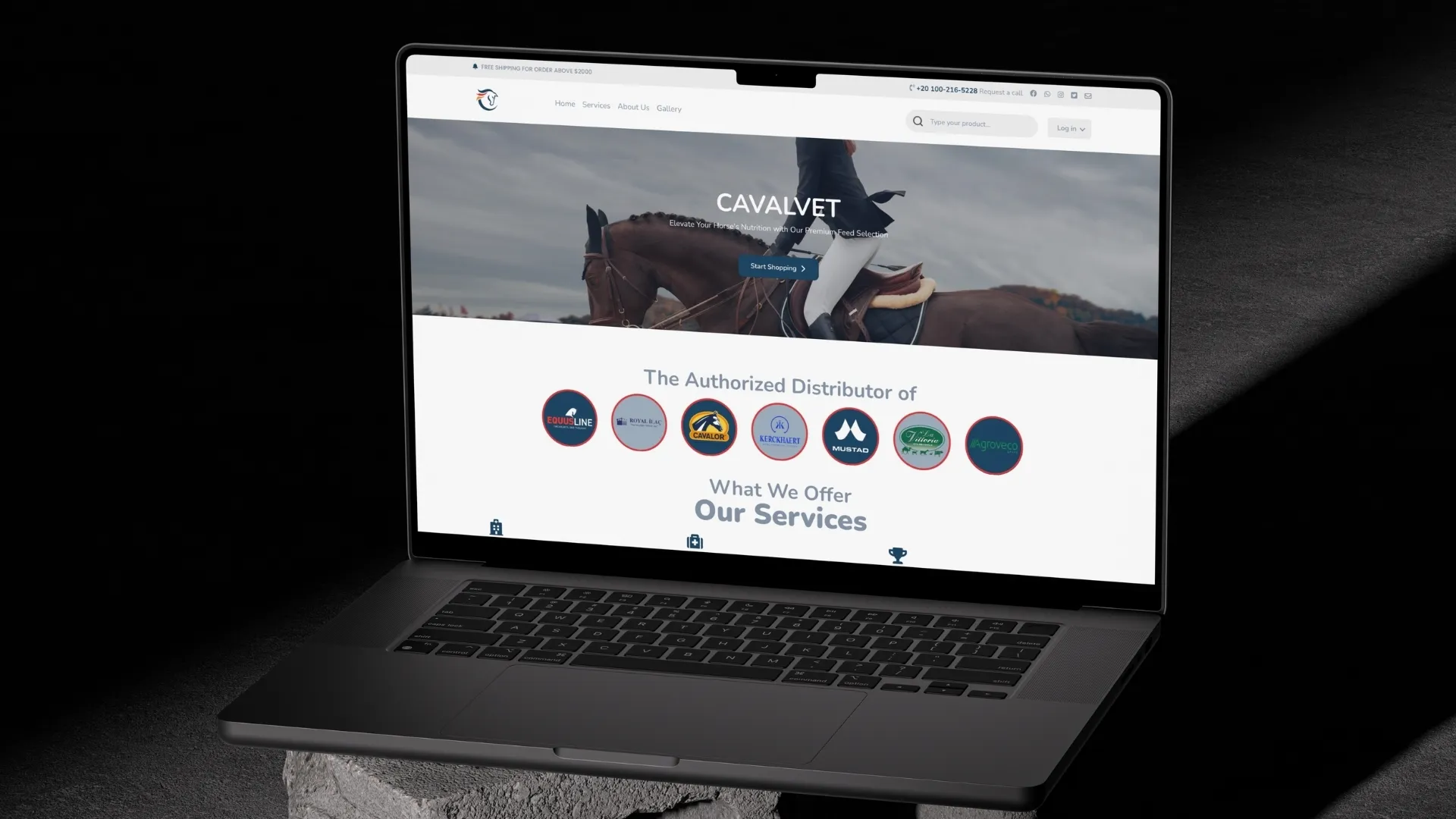
Short answer: A complete digital system connects your website, marketing, lead capture and CRM, daily operations and reporting, so every enquiry, sale and customer record moves through one chain instead of five tools that do not talk to each other. It lets a business in Egypt, Saudi Arabia or the Gulf see which campaign produced which customer and how much revenue followed. You do not have to build it in one go: most businesses digitise in stages over several months, starting with the step where leads or money leak today.
What is a complete digital transformation system?
A complete digital system is a chain of connected layers in which each layer passes its data to the next, from the first ad a customer sees to the report the owner reads at the end of the month. In practice it has five layers:
- Website: the place every campaign points to. It loads fast on mobile, works in Arabic and English and has forms that send enquiries straight into your system rather than to someone's inbox.
- Marketing: social media content, paid ads on Meta and Google, and branding, run by a team such as MazMarketing, with each campaign tagged so its results can be traced.
- Lead capture and CRM: every form, call and WhatsApp message becomes a lead with a source, an owner and a status, so nobody has to remember who asked what.
- Operations: the software the business actually runs on: MazMed for clinics, MazERP for trading and retail, MazStore for online sales and MazAcademy for courses and training.
- Reporting: one place that joins marketing, sales and operations data, so you can answer questions like cost per customer or revenue per channel.
The point is not how many tools you own. It is whether a customer's record created on the website is the same record the clinic, the warehouse or the academy works with later.
What do disconnected tools really cost a business?
Disconnected tools cost staff time, lost customers and decisions made on guesswork, even when every single subscription looks cheap.
- Double entry: a receptionist copies a booking from WhatsApp into a spreadsheet, then into the clinic system, then into the accounting file. Each copy adds mistakes.
- Lost leads: enquiries arrive through the website, Instagram, Facebook and phone calls. Without one inbox, some are answered late and some are never answered at all.
- No single view of the customer: sales knows the first conversation, operations knows the order or the visit, accounts knows the payment, but no one sees the whole relationship.
- Guesswork: when ad results and sales live in different places, budgets are moved on gut feeling rather than on which channel brought paying customers.
The table below sums up the difference.
| Area | Disconnected tools | Connected system |
|---|---|---|
| Data entry | The same customer is typed into several apps | Entered once and shared across every layer |
| Enquiries | Scattered across inboxes, chats and notebooks | Every enquiry becomes a lead with a source and an owner |
| Customer view | Each team sees only its own piece | One record shows enquiries, visits or orders and payments |
| Marketing results | Clicks and likes, with no link to sales | Spend traced to leads, customers and revenue |
| Reports | Built by hand from exported spreadsheets | Generated from live data whenever you need them |
| Growth | Each new branch or channel adds more manual work | New branches and channels plug into the same system |
How does a connected system turn ad spend into measurable revenue?
A connected system turns ad spend into measurable revenue by keeping the campaign's identity attached to the customer from the first click to the final payment. The chain works like this:
- Tagged campaigns: every ad sends people to a specific landing page or form, so the system knows where each visitor came from.
- Captured source: when the visitor fills in a form or starts a chat, the lead is saved with that campaign as its source.
- Tracked outcome: when the lead books an appointment, places an order or enrols in a course, the operations software records it against the same customer.
- Closed loop: reporting then shows spend, leads, customers and revenue per campaign side by side.
With that loop in place, you can keep the campaigns that bring paying customers and cut the ones that only bring clicks. The accuracy depends on discipline as much as software, because staff must record the source of phone and walk-in enquiries too.
In what order should you digitise?
Start with the layer closest to revenue where you lose the most today, then add one layer at a time. For most businesses we work with, a practical order looks like this:
- Stage 1, capture: a clear website or landing page and one place where all enquiries land, with a source and an owner for each.
- Stage 2, operations: the core system for your type of business, such as clinic bookings and patient files, inventory and sales, online orders or course enrolment.
- Stage 3, connection: link leads to operations, so a lead that books or buys becomes a customer record without retyping.
- Stage 4, marketing at scale: increase ad spend only once you can see which campaigns produce customers.
- Stage 5, reporting and automation: dashboards, reminders and follow-up messages built on data you now trust.
The order can change. A clinic with a full calendar but chaotic files may start with operations, while a new online store may start with the website and ads. How long each stage takes depends on scope, data migration and how quickly your team can review and approve the work.
How do you avoid a risky big-bang project?
You avoid a big-bang project by launching in small, usable phases, each of which delivers value on its own before the next begins.
- Define one goal per phase: for example, "every enquiry answered and logged" or "no more paper patient files".
- Run old and new side by side briefly: keep the old process available for a short, agreed period while the team gains confidence.
- Migrate clean data only: move active customers, products or patients first, and archive the rest instead of importing years of duplicates.
- Review before moving on: check what works and what staff are struggling with before starting the next phase.
Phasing also spreads the budget over time and makes it easier to adjust if priorities change.
How do you handle change management and training?
You handle change by involving the people who will use the system from the start and training them on their own daily tasks, not on every feature.
- Name an owner: one person inside the business who decides, answers staff questions and keeps the rollout moving.
- Train by role: receptionists, sales staff, storekeepers and accountants each learn the screens they use every day.
- Write short guides: one-page instructions or short videos for common tasks help new hires as well as current staff.
- Measure adoption: check whether leads, bookings and orders are actually being entered, and fix the reasons when they are not.
Expect a few weeks of adjustment after each phase. Questions and small complaints at this stage are normal and usually point to settings that need tuning.
Frequently asked questions
Do I need to replace all my current tools?
No. Keep the tools that work and connect them where possible. Replace a tool only when it causes double entry or hides data you need.
Is a complete digital system only for large companies?
No. Small clinics, shops and academies often benefit the most, because a small team cannot afford to lose leads or spend hours retyping data.
How much does a complete digital system cost?
It depends on which layers you need, how much custom work is involved and how much data must be migrated. A website alone typically falls between EGP 20,000 and EGP 100,000+, and other layers are quoted after a scoping session.
How long does it take to see results?
The first phase, such as capturing every enquiry in one place, can show results within weeks of launch. A fully connected system with reliable reporting usually takes several months, depending on scope and team adoption.
If you want a website, marketing and operations that work as one system, start with a MazWeb website built to capture every lead, then contact MAZCODEX to plan the order that fits your business.

Comments 0
No comments yet. Be the first to share your thoughts.
Join the conversation
Replying to